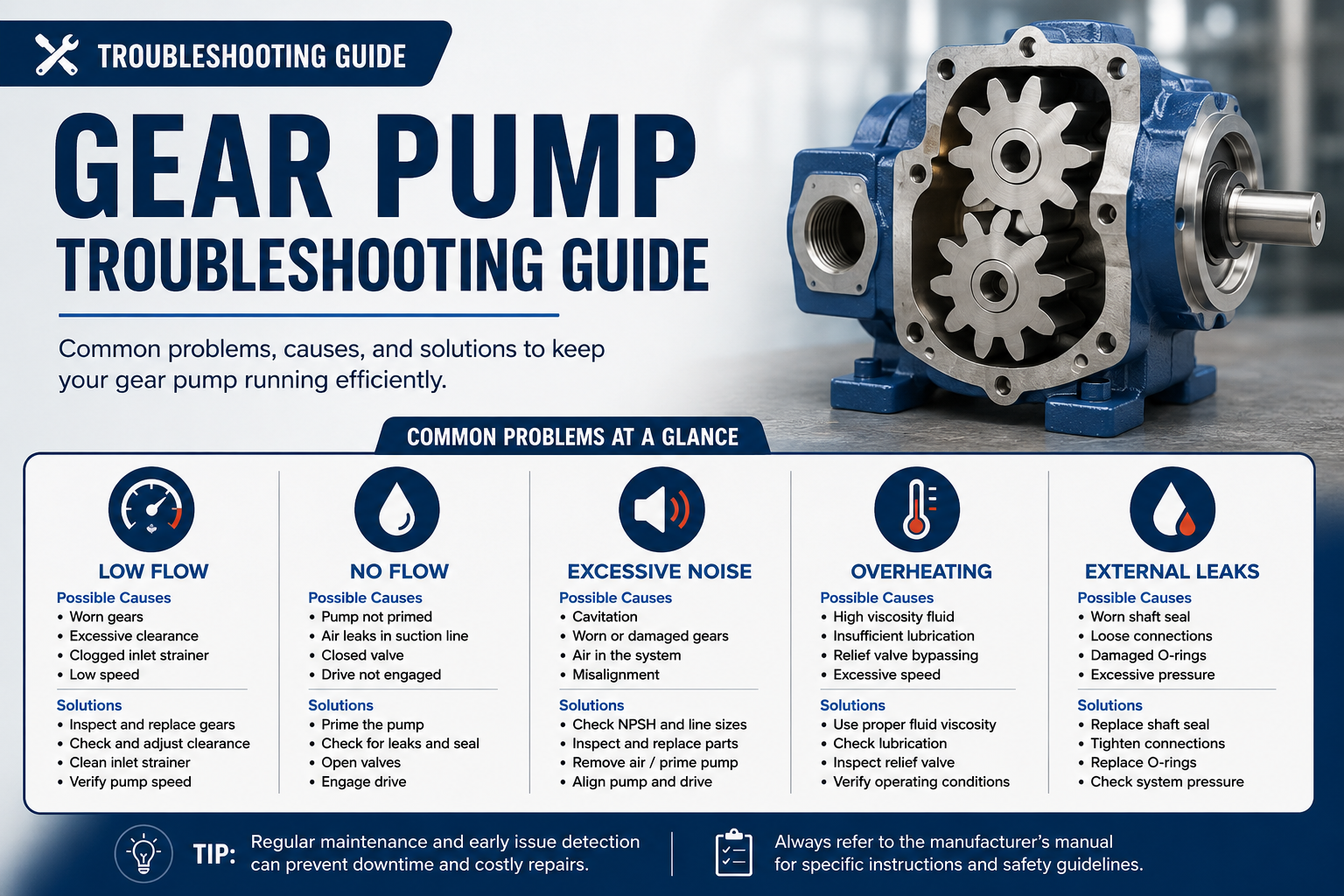
A gear pump that is underperforming costs you production time, energy, and — if ignored long enough — expensive component replacement. The good news is that most gear pump problems follow predictable failure patterns, each with specific symptoms, root causes, and well-established fixes.
🔴 Safety First: Before opening any gear pump for inspection or repair, isolate the drive motor (lock out / tag out), release system pressure, drain the pump casing, and allow all components to cool to a safe handling temperature. Follow your facility's work permit system.
10
Problems
Most common gear pump failure modes
#1
Cause
Fluid contamination — responsible for 60%+ of failures
80%
Preventable
Of gear pump failures are avoidable with proper PM
70
kg/cm²
Max rated pressure — UA Series gear pumps
Quick Reference: Symptom → First Check
Use this at-a-glance panel to identify the most likely culprit for common symptoms before diving into detailed diagnosis.
High-pitched scream
Check suction filter
→ Likely cavitation; clean or replace filter immediately
Gravel / rattling noise
Check oil level
→ Likely aeration; inspect suction fittings for air ingress
Low or no flow
Check rotation direction
→ Verify motor rotation; inspect suction line and gear wear
→ Internal wear; measure clearances and inspect gears
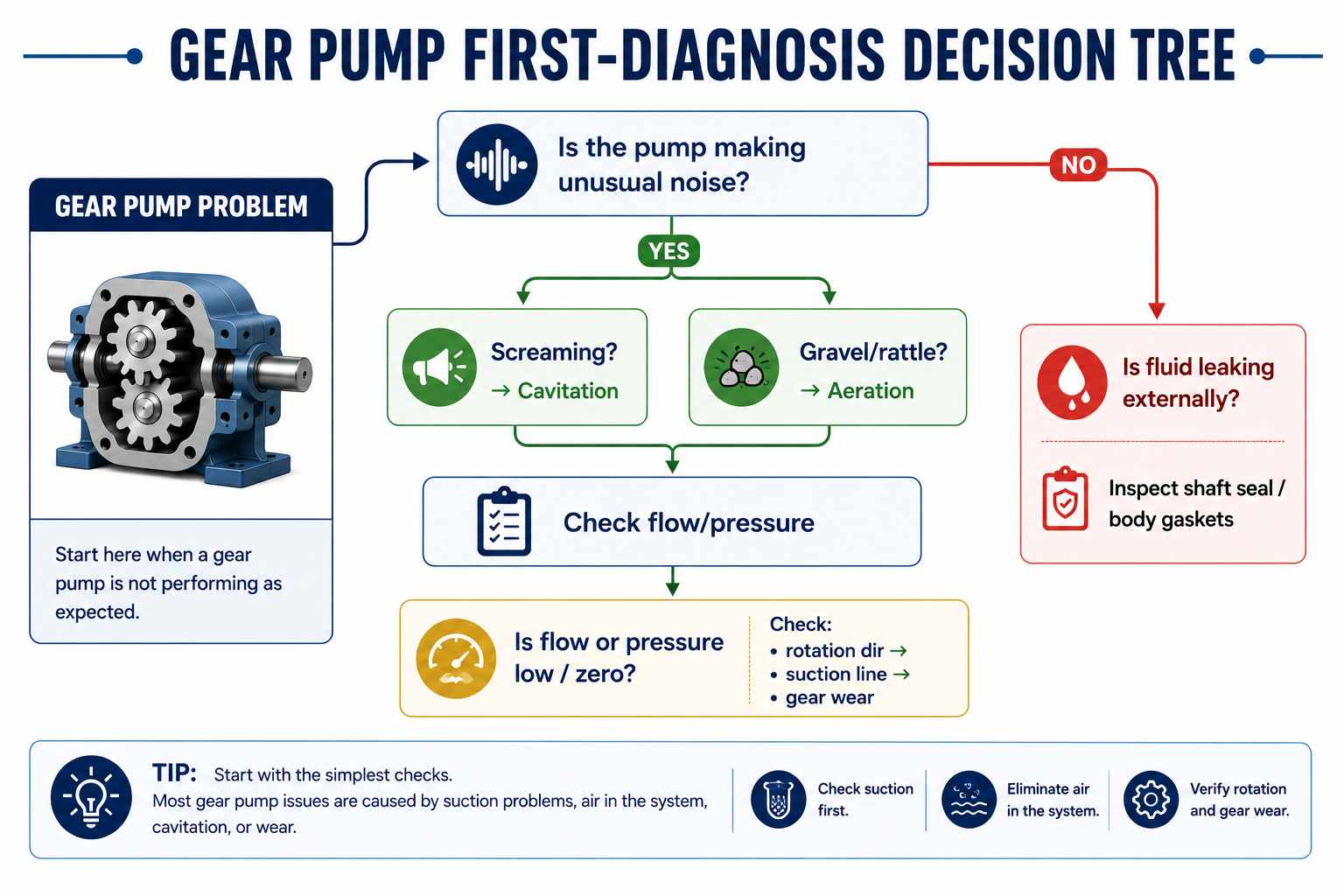
Diagnostic Flowchart — Where to Start
Fig. 1: Gear pump diagnostic decision tree — start here to identify your problem
Identify the Problem by Sound
Sound is your first and fastest diagnostic tool for a gear pump. The type of noise — its pitch, rhythm, and character — almost always tells you what is wrong before you open anything.
🔊
High-Pitched Screaming / Roaring
Continuous high-frequency whine that intensifies with speed. Often accompanied by vibration and reduced flow.
→ Cavitation
🔔
Irregular Rattling / "Gravel"
Loud, irregular clattering sound — as if gravel is being thrown around inside the pump.
→ Aeration
🔩
Rhythmic Knocking / Tapping
A regular, metallic knock in time with shaft rotation.
→ Bearing wear / misalignment
⚙
Grinding / Scraping
Metal-on-metal grinding sound, especially at startup or low speed.
→ Gear contact / insufficient clearance
💨
Hissing / Whistling
A steady hiss, especially audible near the suction port or flanges.
→ Suction restriction / air ingress
📻
Steady Low Hum (Normal)
A consistent, smooth hum that does not change with load or speed.
Check alignment after every maintenance event — Misalignment causes bearing failure
Use the correct fluid grade and viscosity — Oversized viscosity generates heat
Keep fluid clean — Target ISO 18/16/13 or better
Log performance data from day one — Trending data warns of internal wear
Plan proactive seal and bearing replacement — Replace seals annually, bearings at 2,000 hours
Frequently Asked Questions
What causes a gear pump to make a high-pitched screaming noise?
A high-pitched screaming or roaring noise is the classic indicator of cavitation — the fluid vaporises in the low-pressure suction zone and the vapour bubbles collapse violently. The most common cause is a clogged suction filter. Clean or replace the suction strainer and monitor whether the noise stops.
Why is my gear pump producing low or no flow?
Low or no flow is most commonly caused by: wrong motor rotation direction, a blocked suction line or strainer, excessive internal gear wear, a pressure relief valve stuck open, or an air lock in the casing. Start by verifying rotation direction — it is the quickest check and a surprisingly common error.
What is the difference between cavitation and aeration?
Cavitation is when the fluid itself vaporises due to low inlet pressure (high-pitched screaming sound). Aeration is when external air is drawn into the pump through a leak or low fluid level (irregular rattling sound). Cavitation requires reducing suction restriction; aeration requires finding and eliminating the air ingress source.
How do I stop a gear pump from leaking at the shaft?
Shaft leakage means the mechanical seal or lip seal has failed. Replace the seal with the correct elastomer grade for your fluid. Also check the shaft surface finish — it should be Ra ≤ 0.8 µm. If operating pressure exceeds the seal rating, upgrade to a balanced mechanical seal.
What causes a gear pump to overheat?
Overheating is usually caused by a continuously bypassing relief valve (recycling hot fluid), fluid viscosity that is too high, excessive system back pressure, or insufficient fluid in the reservoir. Check the relief valve setting first — it is the most common cause and the easiest to correct.
Can a gear pump run dry?
No. Gear pumps require the fluid being pumped for internal lubrication and cooling. Running dry — even for 30 seconds — causes the metal gears to thermally expand, seize against the housing, and cause catastrophic damage. Always prime the pump before startup.
What is the maximum pressure for UA Series gear pumps?
UA Series gear pumps from Unique Pump Systems are rated for pressures up to 70 kg/cm² with precision profile-ground gears, making them suitable for demanding high-pressure industrial and hydraulic applications.