
Unique Pump Systems, Kailash Industrial Complex, Vikhroli (W)
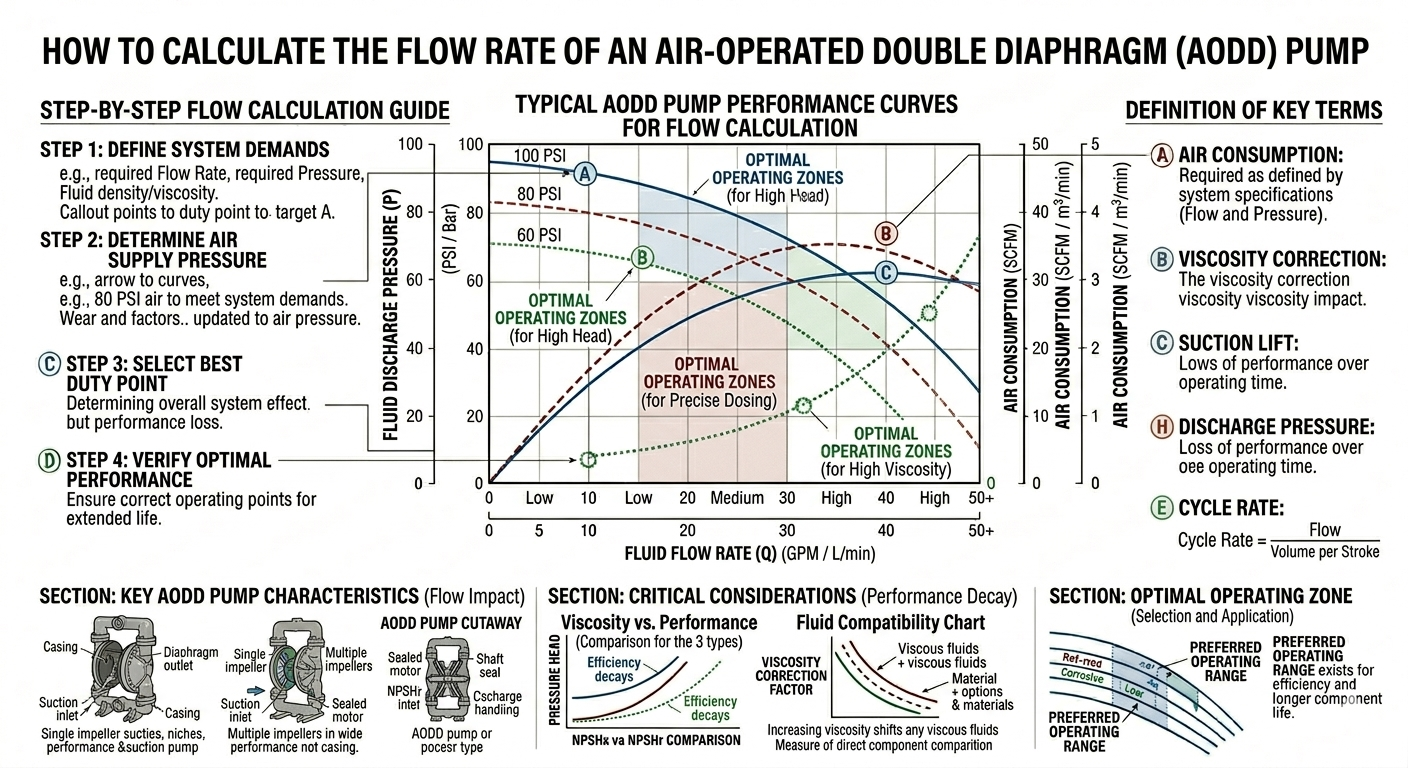
Calculating the flow rate of an AODD pump is essential for selecting the correct pump size, optimizing compressed air usage, and ensuring efficient fluid transfer in industrial applications.
An AODD pump uses compressed air to move fluid through diaphragms, making flow rate dependent on several operating conditions including air pressure, diaphragm stroke, fluid viscosity, and piping configuration.
Flow rate refers to the volume of fluid an AODD pump can transfer within a specific time period, usually measured in:
The actual flow rate varies depending on system conditions.
Higher air pressure generally increases diaphragm movement speed
Larger diaphragm pumps provide higher flow rates
Thicker fluids reduce overall flow performance
Improper pipe sizing increases friction losses
Faster cycling increases output volume
An air operated double diaphragm pump must be properly matched with system requirements for stable flow performance.
Manufacturers provide pump curves showing:
These curves help determine real-world operating flow.
Working with experienced AODD pump manufacturers ensures accurate pump performance calculations.
Air pressure, diaphragm size, and fluid viscosity are the biggest factors.
Yes. Higher viscosity fluids reduce pumping efficiency and flow rate.
Pump curves help determine actual operating performance under different conditions.
No. Flow rate varies based on pump size and operating conditions.
Understanding how to calculate AODD pump flow rate helps industries improve system efficiency, reduce compressed air waste, and select the correct pump size for reliable operation. Accurate calculations ensure better productivity, lower operating costs, and improved pump performance.